


Iran Targets Kuwaiti Oil Refinery As Israel Intensifies Strikes On Tehran
- by RNG247 Reporter
- about 6 months ago
- 460 views
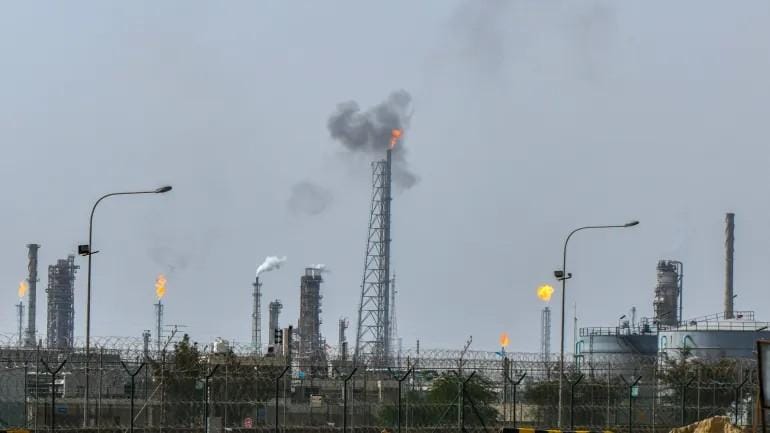
Iran has launched a major offensive across the Gulf, hitting key energy facilities, including Kuwait’s largest oil refinery, while Israel renewed attacks on Tehran during the Persian New Year.
For a second consecutive day, drones struck Kuwait’s Mina al-Ahmadi refinery, triggering fires in several units early Friday. The facility, which processes about 730,000 barrels of oil daily, was hit as Kuwaitis celebrated Eid al-Fitr, marking the end of Ramadan. Kuwait’s national oil company confirmed that some operations were shut down, but no casualties were reported. The military added that air defence systems were actively intercepting incoming missile and drone threats.
These attacks are part of a wider Iranian campaign targeting Gulf Arab states, in retaliation for an Israeli strike earlier in the week on Iran’s South Pars gas field, a critical source supplying roughly 80 percent of the country’s domestic natural gas.
Iran’s Islamic Revolutionary Guard Corps (IRGC) said it also targeted US forces at the UAE’s Al Dhafra airbase, along with locations inside Israel. The UAE reported incoming threats, Bahrain confirmed a warehouse fire caused by debris, and Saudi Arabia said it intercepted and destroyed more than a dozen drones within two hours.
Iranian Foreign Minister Abbas Araghchi warned that the strikes on Gulf infrastructure represent only a small portion of Iran’s capabilities, and threatened a much stronger response if Iranian energy facilities are attacked again.
Israeli Prime Minister Benjamin Netanyahu said Israel acted alone in striking South Pars and indicated it would pause further attacks on energy infrastructure at the request of US President Donald Trump, who distanced himself from the operation.
In Qatar, the Ras Laffan LNG terminal—the largest in the world—suffered heavy damage from Iranian strikes, cutting about 17 percent of global liquefied natural gas supply and causing an estimated $20 billion in annual losses. QatarEnergy chief Saad al-Kaabi said repairs could take three to five years and warned the destruction could set the region back by up to two decades.
Iran has also shut down the Strait of Hormuz, a key global route for oil and gas shipments, leading to surging energy prices and disruptions to global supply chains, affecting industries from technology to agriculture. Several Asian countries have already begun rationing electricity and reducing working hours.
Analysts say the conflict is entering a more dangerous phase, with significant risks for global markets, especially in Asia and Europe.
Overnight, Israel carried out further strikes on Iran, with explosions reported in Tehran as residents marked Nowruz. Details remain limited.
In Israel, sirens sounded across central areas, including Tel Aviv, after a second wave of Iranian missile attacks within an hour. Air defence systems were deployed to intercept the missiles.
An IRGC spokesperson insisted Iran continues to produce missiles, rejecting Israeli claims to the contrary. Shortly after, Iranian state media reported that the spokesperson, Ali Mohammad Naeini, was killed in an airstrike.
Israel also expanded its military operations into Syria, targeting infrastructure in response to attacks on the Druze community in southern Suwayda province, though Syrian authorities have not confirmed the strikes.
The conflict has caused heavy casualties. More than 1,300 people have been killed in Iran. In Lebanon, Israeli operations against Hezbollah have displaced over one million people and killed more than 1,000, while Israel says over 500 Hezbollah fighters have been killed.
In Israel, Iranian missile attacks have killed at least 15 people, with additional fatalities reported in the occupied West Bank. At least 13 US military personnel have also been killed in the escalation.









0 Comment(s)